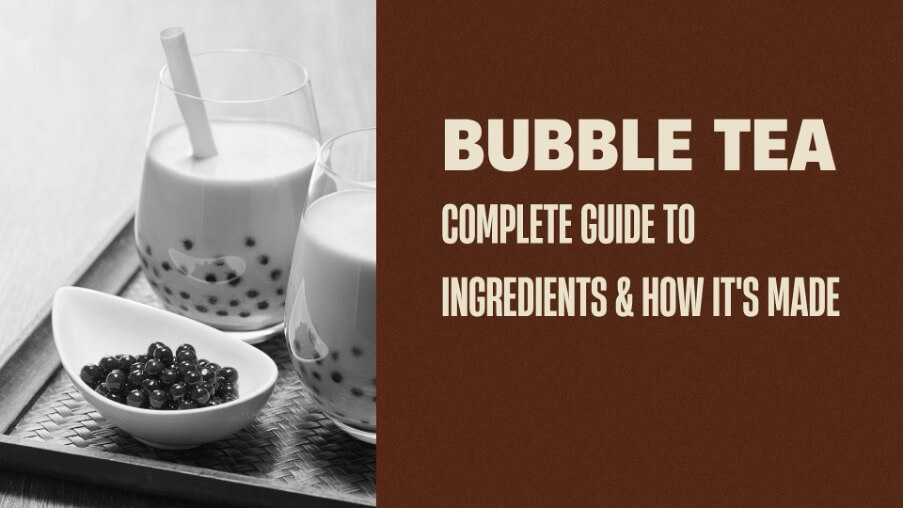
Bubble tea has become one of the fastest-growing beverage categories in the world — and the reasons are not hard to see. Its combination of bold flavors, customizable textures, and striking visual appeal has made it a fixture on menus ranging from independent cafés to global franchise chains. Whether you are opening your first shop, expanding an existing beverage line, or evaluating ingredients as a distributor, understanding what bubble tea actually is — and what goes into it — is the starting point for every sound sourcing decision.
Bubble tea is a sweetened, tea-based drink typically served cold, mixed with chewy tapioca pearls or other toppings, and consumed through a wide straw. Despite what many people assume, the name does not refer to the pearls — it comes from the frothy bubbles that form when the drink is shaken or blended.
First developed in the 1980s, bubble tea spread rapidly across Asia before reaching Western markets in the early 2000s. Today it is sold in over 60 countries through independent shops, franchise chains, supermarkets, and ready-to-drink retail formats. The global bubble tea market is valued at over USD 3 billion and continues to grow year over year.
Every bubble tea drink is built from the same set of foundational components. A clear understanding of each ingredient helps buyers assess quality, compare suppliers, and make informed purchasing decisions — whether they are ordering their first pallet or managing a multi-location supply chain.
The tea base provides the drink's flavor backbone. Black tea — most commonly Assam or Ceylon — is the traditional choice, though green tea, oolong, and jasmine are widely used depending on the recipe and target market. For commercial operations, pre-portioned tea bags in standardized weights are the practical standard, delivering consistent brew strength across high-volume service.
Milk tea versions of bubble tea call for either fresh dairy milk or non-dairy creamer powder. In most commercial settings, non-dairy creamer is the preferred choice: it has a longer shelf life, requires no refrigeration, and delivers a consistent flavor profile regardless of seasonal dairy variation. For international buyers, it also simplifies logistics considerably.
Sweetened syrups — brown sugar, cane sugar, or flavored options such as taro, matcha, or passion fruit — add sweetness and define the drink's character. The sugar concentration, measured in degrees Brix, directly affects taste and mouthfeel. Brix stability across production batches is a critical spec to verify when evaluating any syrup supplier, since even small variations result in noticeable inconsistency in the finished drink.
Tapioca pearls are the ingredient most closely associated with bubble tea. These small, chewy spheres are made primarily from cassava starch — formed, dried or frozen, then cooked before service to achieve their characteristic texture. Quality varies meaningfully between manufacturers in terms of size, chew level, cooking time, and how well pearls hold their texture after they have been prepared.
For commercial buyers, tapioca pearls are available in three main formats:
Choosing the right format comes down to kitchen workflow, available storage, and the realities of your supply chain.
Beyond tapioca pearls, a wide range of toppings has become standard across modern bubble tea menus. Each serves a different sensory purpose and appeals to different consumer preferences:
Each topping category carries its own sourcing requirements around storage temperature, shelf life, and portioning format.
As the category has matured, bubble tea has branched into several distinct formats — each with its own ingredient profile and menu positioning.
Milk Tea is the original and most widely recognized format: brewed tea blended with milk or creamer, sweetened with syrup, and served over tapioca pearls. Brown sugar milk tea and taro milk tea consistently rank among the best-selling variants globally.
Fruit Tea swaps milk for fruit juice or syrup, usually built on a green or white tea base. It has grown strongly in markets that favor lighter, dairy-free options — particularly in Europe and among health-conscious consumers.
Blended or Slush drinks are made by combining ingredients with ice in a blender, producing a smoothie-like texture. These rely on powder-based ingredient formats for consistency and require appropriate blending equipment.
Ready-to-Drink (RTD) is the fastest-growing segment in the category, with canned and bottled bubble tea now appearing in supermarkets and convenience stores worldwide. This format demands co-packing or OEM manufacturing capability and represents a significant commercial opportunity for ingredient suppliers with the right production infrastructure.
For importers, distributors, and shop operators comparing suppliers, quality comes down to four factors that are measurable and directly relevant to business outcomes.
Batch consistency matters most. Pearls should cook identically every time. Syrup Brix should hold steady across production runs. Ingredient variability shows up in the cup — and directly affects customer satisfaction and brand reputation.
Food safety certification is a baseline requirement for buyers in regulated markets — FSSC 22000, HACCP, and ISO 22000 are the standards most commonly required for import compliance in the US, EU, Japan, and South Korea. But certification alone does not guarantee batch-to-batch consistency. The more meaningful question is what testing actually happens in practice.
A supplier with an in-house laboratory that tests every incoming batch of raw materials independently — rather than relying solely on supplier-provided certificates — provides a meaningfully higher level of quality assurance. For tapioca pearls specifically, this matters more than for most ingredients: pearls have high moisture and nutrient content, which creates conditions for rapid microbial growth. A supplier that does not test at the raw material stage is running a production process with an uncontrolled variable at its foundation.
Per-batch microbial testing, combined with in-process checks and pre-shipment verification, is the standard that separates manufacturers with a genuine quality management system from those with certification paperwork and little else behind it.
Buyers sourcing for Japan or South Korea face an additional compliance layer worth factoring in early. Both markets impose stricter microbial limits on imported food ingredients than most other jurisdictions, and Korean regulations in particular require the absence of preservatives in certain product categories. Working with a supplier that actively monitors regulatory changes across its export markets — and adjusts product specifications ahead of those changes — removes a significant compliance burden from the importer.
Logistics flexibility is often overlooked but practically important. Ingredients that can be stored and shipped at ambient temperature reduce cold chain costs significantly, simplify customs clearance, and make supply chains more resilient — particularly for buyers servicing markets across multiple climate zones.
Customization depth is the differentiator for brands looking to stand out. The ability to adjust pearl size, syrup Brix, flavor profile, packaging format, and labeling separates manufacturers with genuine development capability from those offering only off-the-shelf catalog products.
Ingredient knowledge becomes most useful when applied to real decisions. The two cases below reflect the kinds of sourcing challenges that come up regularly — and what it looks like when a supplier engages with the problem rather than just the order.
A bubble tea chain operating multiple locations in Mexico had been experiencing a persistent quality problem that supplier changes had not resolved: tapioca pearls that appeared fully cooked on the outside but remained hard at the center. The inconsistency worsened during peak service hours, when staff had no reliable way to diagnose or correct it in real time. Customer complaints increased, and the problem began affecting the brand's reputation across locations.
After reaching out to BubblePhil for technical support, the team's approach was diagnostic rather than transactional. Through online consultations and live cooking tests conducted with the client's staff, BubblePhil's R&D team analyzed the specific conditions across the client's locations: local water mineral content, kitchen equipment, altitude above sea level, standard cooking procedures, and holding times after preparation.
The root cause was identified at the formulation level. At altitude, water boils at a lower temperature — and the pearl formulation in use was not optimized for the reduced thermal environment the client's kitchens operated in. No amount of extended cooking time could compensate for the temperature gap.
BubblePhil developed a customized tapioca pearl formulation with adjusted starch ratios, hydration performance, and heat penetration characteristics to match the client's operating conditions. Cooking consistency improved significantly across all locations. Daily product waste decreased, staff training became easier, and the chain was able to resume its expansion plans with a product it could rely on operationally.
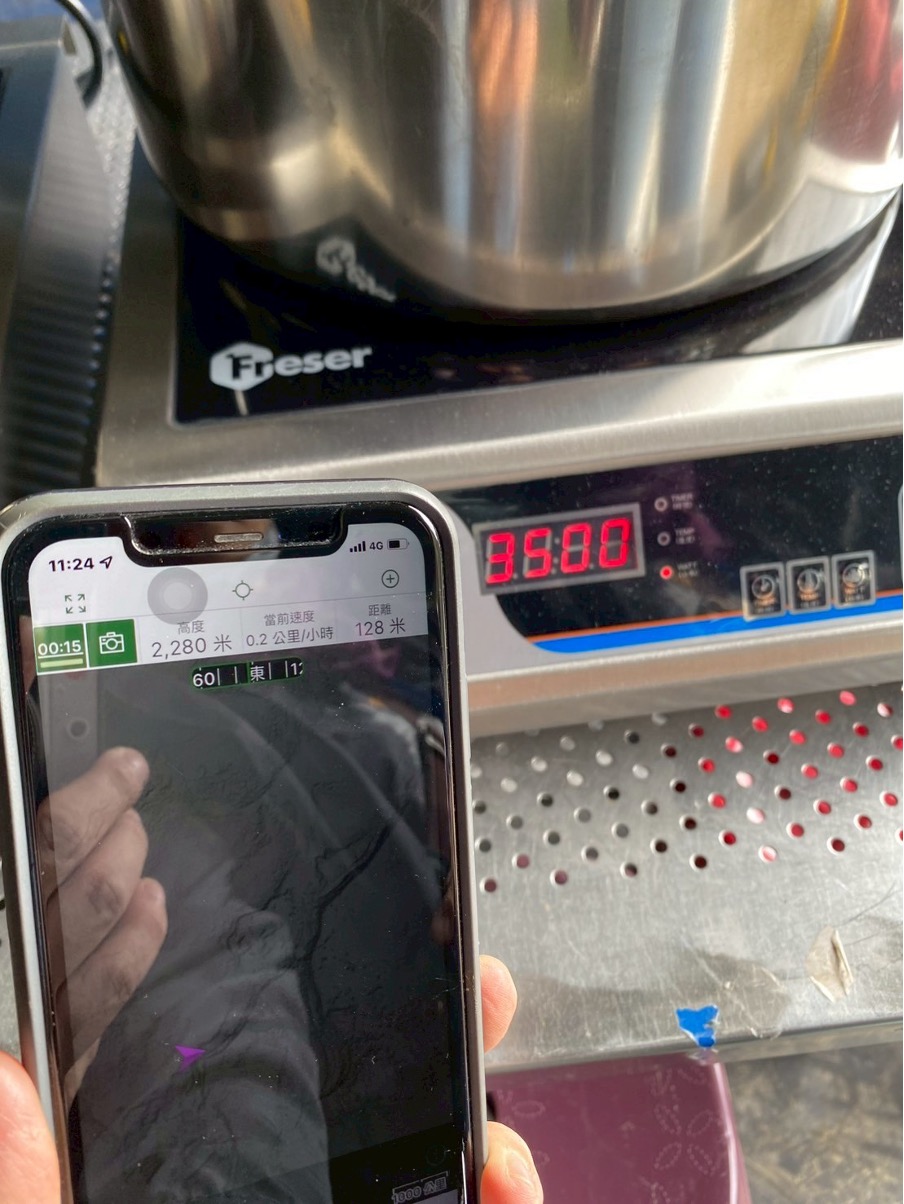
(Cross-Border Technical Support: A snapshot from our remote cooking validation with a client in Mexico at 2,280 meters, where we guided their staff to analyze starch gelatinization under low atmospheric pressure.)
A trading partner distributing bubble tea ingredients into European retail channels faced a structural logistics problem: ocean freight from Asia takes 45 to 60 days, and after customs clearance and local distribution, tapioca pearls were arriving at retail with limited usable shelf life remaining. This created inventory pressure for the distributor, undermined retailer confidence, and made large-volume sales commitments difficult to sustain.
The issue was not solved by switching to a faster shipping method — that was not economically viable for the product category. BubblePhil's R&D team worked with the client to develop a solution at the formulation level: adjustments to starch composition, moisture balance, production stability, and packaging structure were made to significantly extend the product's shelf life under export and distribution conditions, without compromising texture or eating quality after opening.
The reformulated product gave the distributor meaningfully more flexibility in warehousing, retailer placement, and promotional planning. Within months of launching the upgraded version, the client had expanded into additional retail and foodservice channels, reorder frequency had increased, and inventory loss had decreased. A logistics problem that had constrained growth for an extended period was resolved through product development rather than supply chain restructuring.
Both cases illustrate the same principle: the quality of sourcing decisions — ingredients, formats, and supplier capability — has a direct and measurable impact on how a bubble tea business performs. The difference between a supplier that ships a catalog product and one that solves an operational problem is the difference between a vendor and a partner.
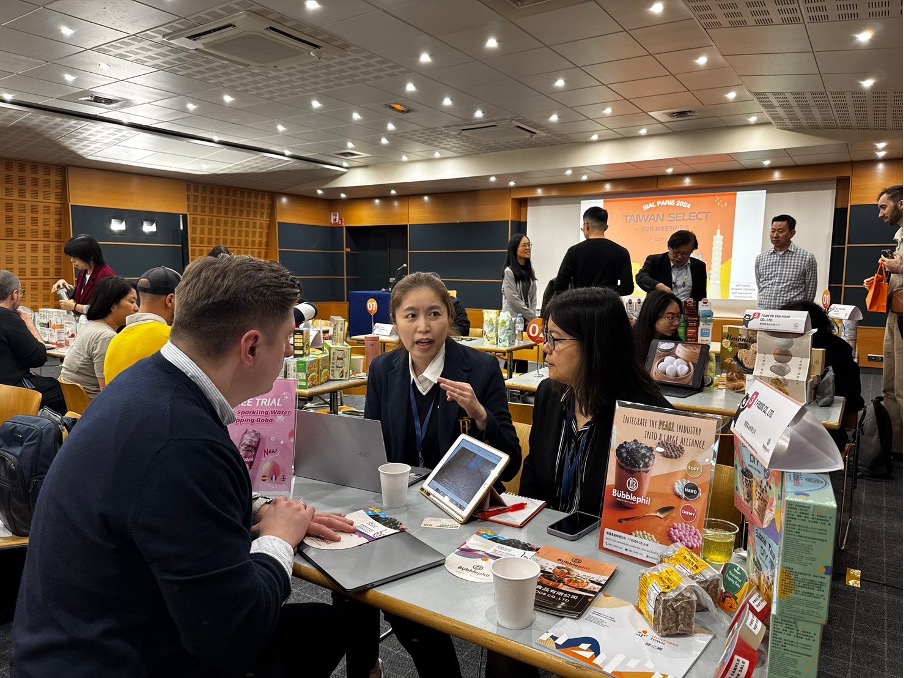
(Collaborative Product Alignment: Bubblephil’s technical and export teams reviewing custom formulation parameters alongside our global partners to ensure seamless market entry.)
BubblePhil is a bubble tea ingredient manufacturer and supplier with over 30 years of experience in the category. The company started as a raw material supplier to large beverage chains and has since grown to serve a global client base spanning independent operators, regional distributors, and established brands across multiple continents.
The product range covers the full scope of bubble tea ingredients: tapioca pearls in multiple formats (dry, frozen instant, and room temperature instant), flavored syrups, popping boba, non-dairy creamer powder, tea bags, agar crystal balls, coconut jelly, and sparkling ready-to-drink boba. For buyers, this breadth means fewer vendor relationships and a more streamlined sourcing process.
BubblePhil's operating approach is built around three things that matter in practice: consistent product quality across batches, flexibility to accommodate different order sizes and logistics requirements, and the capacity to support product customization when standard formulations do not fit a client's needs.
BubblePhil's manufacturing partner, T Foods Co., Ltd., holds four internationally recognized certifications: FSSC 22000, ISO 22000, HACCP, and HALAL. All are maintained through annual renewal and independent third-party audit.
FSSC 22000 is among the most comprehensive food safety management standards available globally and is a common prerequisite for entry into European and North American supply chains. HACCP provides systematic identification and control of food safety hazards across every production stage. ISO 22000 confirms alignment with international food safety management requirements. HALAL certification opens access to Muslim-majority markets across the Middle East and Southeast Asia.
These certifications are held by T Foods Co., Ltd. — the manufacturing entity behind BubblePhil — and apply to the full range of bubble tea ingredients BubblePhil supplies.
For businesses at any stage of growth, BubblePhil offers the product depth and operational experience to support reliable, scalable supply. Learn more about BubblePhil or browse the full product range.
Here are answers to the questions we hear most often from buyers and shop owners getting started with bubble tea.
BubblePhil supplies commercial-grade bubble tea ingredients to shops, distributors, and beverage brands worldwide. Browse our product range or contact us to discuss your sourcing requirements.