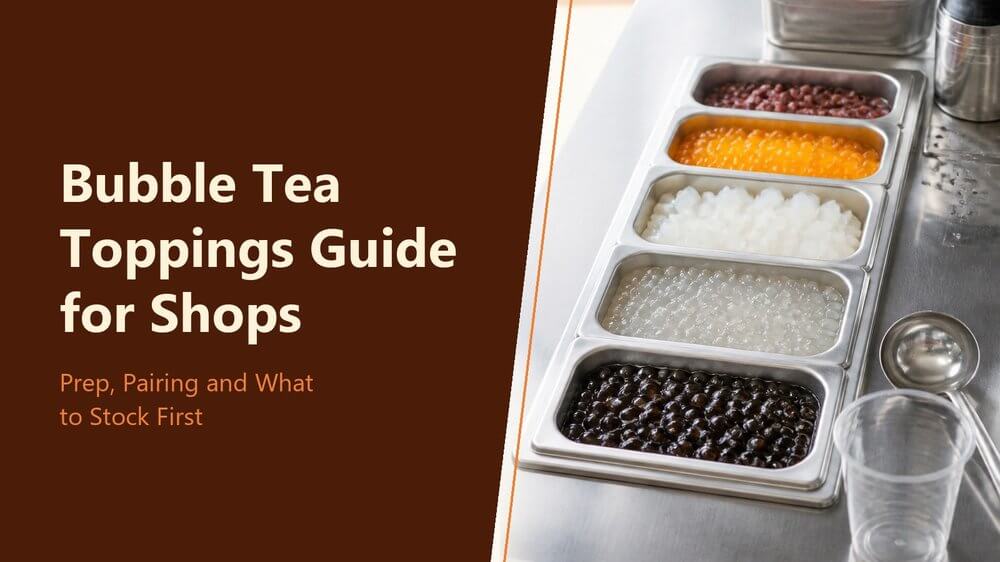
Which bubble tea toppings should a shop stock first? Start with the toppings your core drinks need, then add the ones that cost the least prep time. Dry tapioca pearls are the classic milk tea topping, but they are also the one common topping that has to be cooked in batches and served within four hours. Nata de coco, popping boba and canned toppings such as red bean and pudding strips go into the cup straight from the container, so they add texture without adding a cooking step.
That split between ready-to-use toppings and cook-fresh toppings runs through every decision below, from the drinks each topping suits to how many you can realistically keep on the line.
Six points decide which bubble tea toppings belong on a shop's prep line:
Bubble tea toppings are the chewy, jelly-like or creamy add-ins that give a drink its texture, and most fall into four families: chewy toppings, jellies, popping boba and creamy or canned toppings. The table below sets out each common topping by texture, the drink bases it suits and how much preparation it needs before it reaches the cup.
| Topping | Texture | Best drink bases | Prep before serving | BubblePhil range |
|---|---|---|---|---|
| Dry tapioca pearls | Soft, chewy, dense | Milk tea, brown sugar milk | Boil, rest and sweeten in batches; serve within 4 hours | Tapioca pearls |
| Frozen instant tapioca pearls | Soft, chewy | Milk tea | Heat from frozen: boil-in-bag 5–6 minutes or about 50 seconds in a 1,400 W commercial microwave | Frozen instant tapioca pearls |
| Room-temperature instant tapioca pearls | Soft, chewy | Milk tea | Steep the 50 g pack in hot water; no boiling | Room-temperature instant tapioca pearls |
| Crystal boba | Firm, springy, translucent | Milk tea, fruit tea | Commercial crystal boba is usually sold ready to serve in syrup; confirm with your supplier | 8 flavors |
| Sweet potato or taro balls | Soft, bouncy | Milk tea, warm desserts | Mix powder into dough, cut, boil until floating | Sweet potato ball powder |
| Nata de coco | Light crunch, then a soft chew | Fruit tea, milk tea, smoothies | Ready to use from the can | 8 flavors |
| Aloe vera jelly | Tender, cool | Fruit tea, iced drinks | Ready to use from the can | Canned |
| Grass jelly and aiyu jelly | Soft, wobbly | Milk tea (grass jelly), fruit and lemon tea (aiyu) | Prepared from powder and set before service | Grass jelly and aiyu jelly powders |
| Popping boba | Thin skin that bursts | Fruit tea, sparkling drinks | Ready to use | 15 flavors |
| Pudding strips | Smooth, creamy chew | Milk tea, desserts | Ready to use from the can | Canned |
| Red bean, taro paste, mung bean, Job's tears | Soft, starchy | Milk tea, shaved ice, sweet soups | Ready to use from the can | Canned |
Most shops start with three or four rows of this table rather than all eleven, and the sections that follow explain how to pick them. For the full range in one place, see BubblePhil's bubble tea toppings page.
Chewy toppings are the backbone of a milk tea menu, and tapioca pearls are the one most customers expect to see. The format you buy them in decides how much of your day goes into preparing them.
Tapioca pearls come in three formats, and each puts a different load on the prep station:
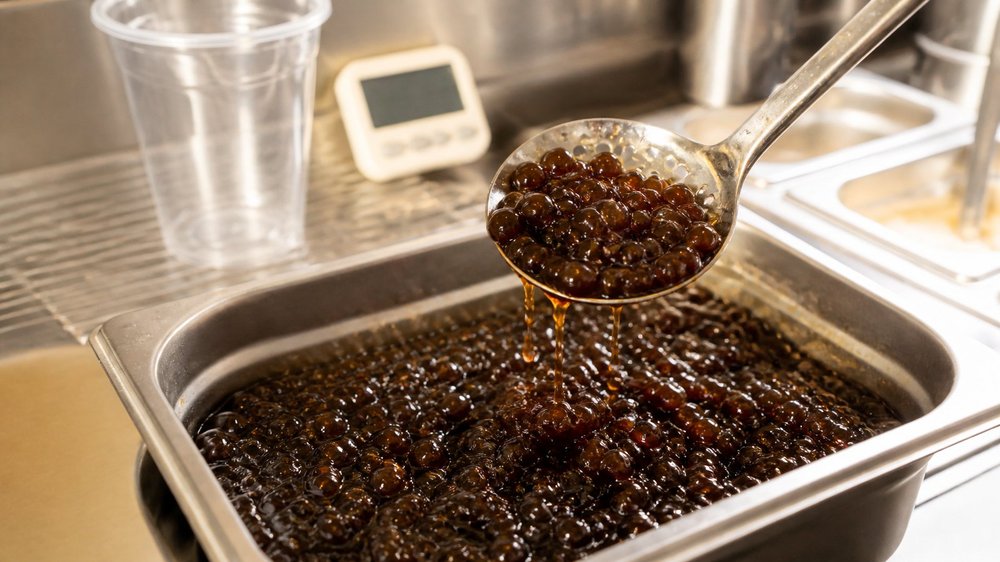
The trade-off is labor against ingredient cost per serving, and BubblePhil's Tapioca Pearls 101 guide compares the formats, sizes and colors in more detail.
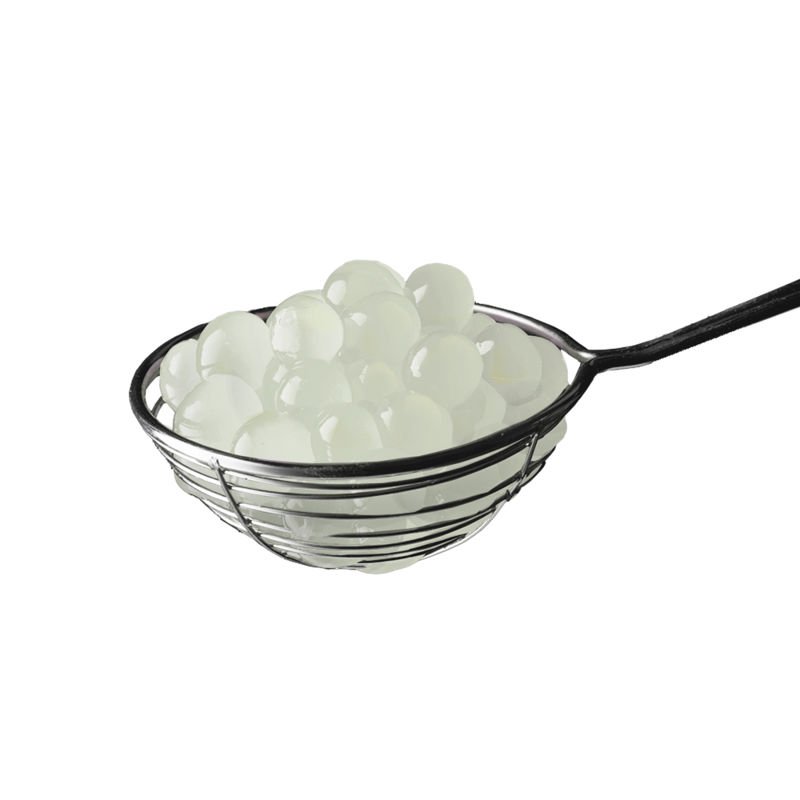
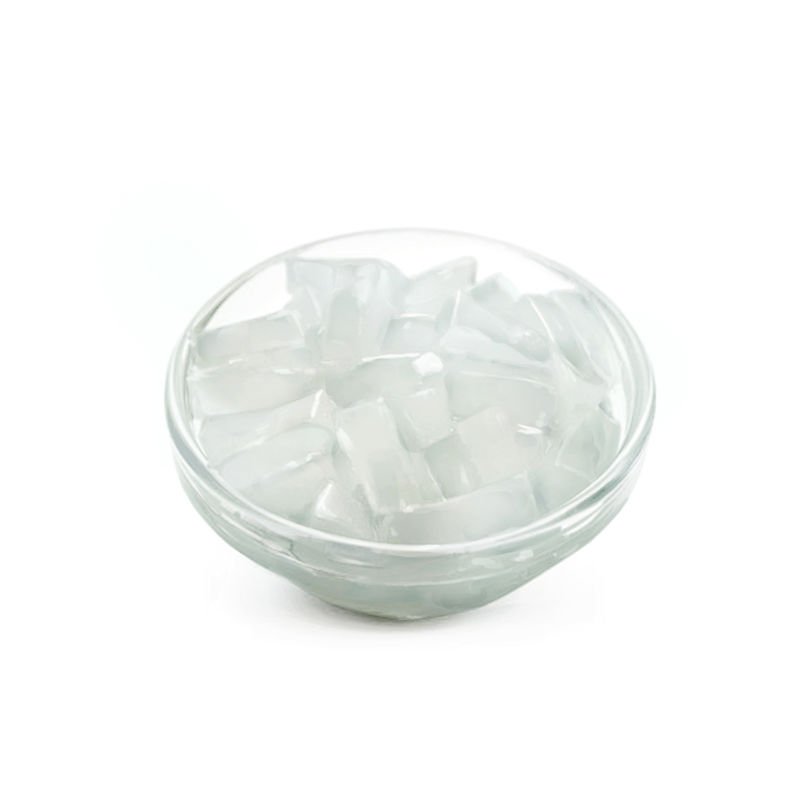
Crystal boba is a translucent, springy topping made from plant-based gelling agents instead of tapioca starch, and it is often sold as agar boba or "white pearls". It has very little flavor of its own and takes on the sweetness of the syrup it is packed in, which lets it sit in both milk tea and fruit tea. Gelling agents and storage terms vary between brands, so check the ingredient label and the supplier's spec sheet before you put it on the menu. BubblePhil offers crystal boba in eight flavors, from Original and Brown Sugar to Sakura and Matcha.
Taro balls and sweet potato balls are dough-based toppings with a softer, bouncier bite than tapioca pearls. They are made in the shop: BubblePhil's Jiufen-style sweet potato ball powder is mixed with room-temperature water at 1,000 ml to 2 kg of powder, cut to size and boiled until the pieces float. That makes them a cook-fresh topping, closer to dry tapioca pearls than to anything that comes out of a can.
Jellies sit at the other end of the prep scale.
Jelly toppings are lighter than tapioca pearls and suit fruit tea, and most of them need no cooking. The exceptions are grass jelly and aiyu jelly when they are made from powder.
Popping boba also arrives ready to use, but it behaves differently in the cup.
Popping boba is a topping with a thin, flexible skin around a flavored syrup center that bursts when bitten. It is ready to use, and it works best in fruit tea, lemonade and sparkling drinks, where its fruit flavors match the base. Heavy milk tea tends to mask it, and hot drinks are not a good fit.
BubblePhil's popping boba line covers 15 flavors in 3.4 kg tubs, packed four to a carton, with a suggested 40–60 g per cup. Straws need an opening of at least 10 mm. For how popping boba compares with tapioca pearls on texture and drink pairing, see Boba vs Pearl vs Popping Boba, and for sourcing, the popping boba supplier page lists the full range.
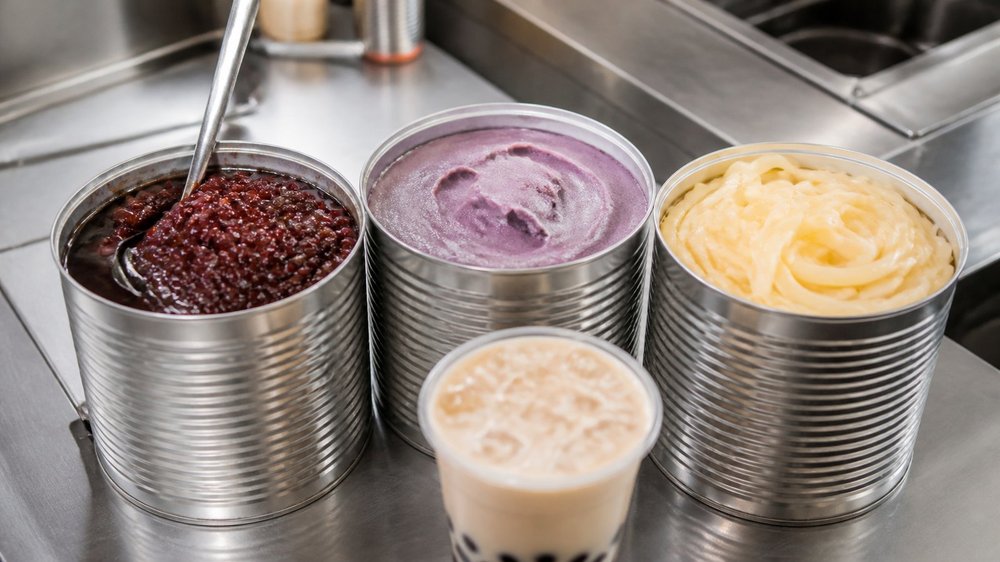
Canned toppings are the lowest-effort way to widen a menu, because they arrive cooked and sealed and skip the soaking and boiling that dry beans and grains need. BubblePhil's canned toppings cover seven items:
All seven come in 3 kg cans, six to a carton. Shelf life is two years unopened; once opened, reseal the can, refrigerate it and use it promptly.
With the toppings themselves covered, the next question is which ones belong in which drinks.
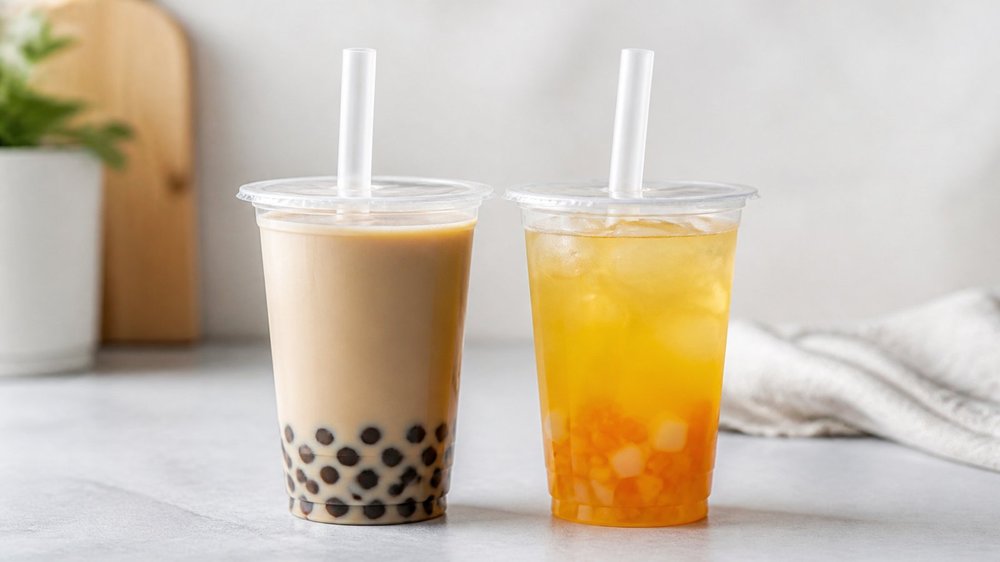
The best toppings for milk tea are the chewy and creamy ones, and the best toppings for fruit tea are the light, juicy ones. The reason is texture against body: a rich, milky base needs a topping with enough chew or weight to hold its own, while a clear, acidic base is easily overpowered.
| Drink base | Toppings that work | Toppings to use with care |
|---|---|---|
| Milk tea | Tapioca pearls, pudding strips, red bean, taro paste, grass jelly, crystal boba | Popping boba (flavor gets lost) |
| Fruit tea and lemon tea | Nata de coco, popping boba, aloe vera jelly, aiyu jelly, crystal boba | Red bean and taro paste (heavy and starchy) |
| Fresh milk and brown sugar milk | Tapioca pearls, crystal boba (Brown Sugar flavor), pudding strips | Fruit-flavored jellies |
| Sparkling and soda drinks | Popping boba, nata de coco, crystal boba | Starchy toppings that sink and turn dense |
| Hot drinks | Tapioca pearls, red bean, taro paste | Popping boba |
For a shop, the more useful reading of this table is across the rows rather than down them. A topping that appears in three or four rows, such as crystal boba or tapioca pearls, earns its place on the line; a topping that fits only one drink is a candidate for a seasonal slot.
Choosing a topping lineup starts with your best-selling drinks, then weighs each topping by how much prep and storage it adds. There is no fixed number that suits every shop, but the same four checks apply to every lineup.
List the three to five drinks that will carry most of your sales, and write down the topping each one needs. Toppings that appear against several of those drinks go in first, because each additional drink they serve spreads their cost and their prep time further. How many drinks to launch with is a separate decision, covered in BubblePhil's guide to menu size and supplier questions for new shops.
Every topping on the line falls into one of three prep groups, and the group matters more than the flavor when you are planning labor.
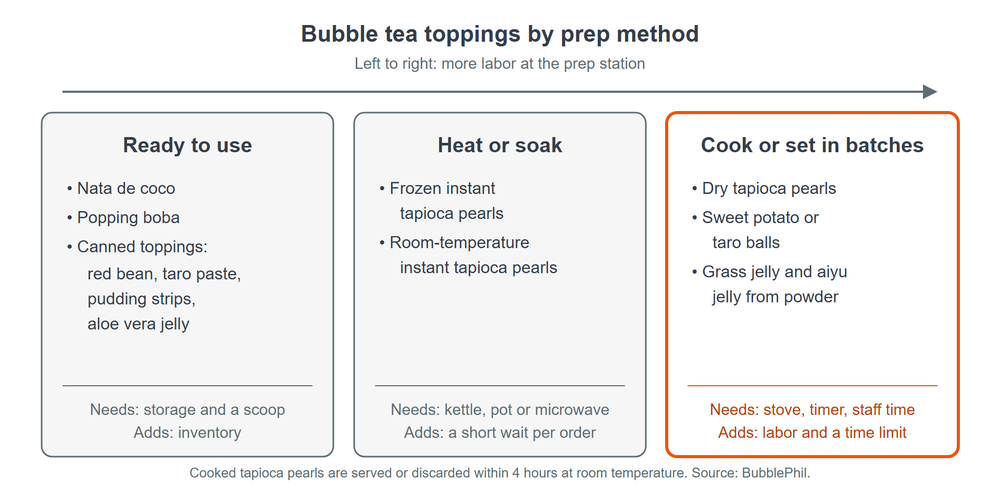
Each extra cook-or-set topping adds another batch with its own clock. Each extra ready-to-use topping adds inventory instead of labor. A shop short on kitchen staff can run a wide menu on the first two groups and keep the third to one item.
Core toppings are the ones your best-selling drinks depend on, and they should be versatile and slow to expire. Seasonal toppings rotate in for a limited-time drink and rotate out when it ends. Ready-to-use toppings suit the seasonal slot best, because they can be dropped from the menu without leaving a cooking routine behind, and canned toppings with a two-year unopened shelf life can wait in storage between seasons.
Topping cost per cup is the serving weight multiplied by the price per kilogram, adjusted for how much of the pack actually reaches the cup:
Cost per cup = serving weight (g) × landed price per kg ÷ 1,000 ÷ usable share of the pack
The usable share is where shops get caught out. Canned toppings, nata de coco and popping boba are packed with syrup, so weigh what you scoop after draining rather than relying on the gross weight on the label. Dry tapioca pearls work the other way: they gain weight as they cook, and any batch discarded at the four-hour mark lowers the usable share. Run the calculation with your own landed prices; the Tapioca Pearls 101 guide applies the same logic to tapioca pearl formats.
Before a topping goes on the menu, six details on its spec sheet decide whether it fits your operation:
Where a spec sheet leaves any of these blank, ask the supplier before ordering. BubblePhil can supply specifications for each topping in its range on request.
Shop owners and distributors planning a topping lineup tend to raise the same four questions.
Tapioca pearls are the topping most closely tied to bubble tea, to the point that the drink is often called boba after them. Beyond tapioca pearls, popularity depends on your market and your drink mix, so let your core drinks decide the next topping rather than a general ranking.
No topping is a health food, and most of a topping's calories come from the syrup it is packed in or soaked in and from the serving size. Lighter jellies such as nata de coco and aloe vera are less dense than starchy toppings, but the nutrition label on each product is the only reliable comparison.
It depends on the format. BubblePhil's canned toppings keep for two years unopened and go in the refrigerator once opened, while room-temperature instant tapioca pearls are stored below 25°C. Cooked tapioca pearls are a different case: they should be served or discarded within four hours at room temperature.
Yes, if the supplier makes the full range. BubblePhil supplies tapioca pearls, popping boba, crystal boba, nata de coco, canned toppings and jelly powders, which keeps specifications, labeling and shipping under one supplier.
Choosing a topping lineup comes down to your menu and your prep station. Prices and cost per cup are a different matter, because they depend on your menu, your daily volume and the landed cost in your market. Tell BubblePhil which drinks are on your menu and roughly how many cups you serve a day, and the team can suggest a topping lineup and quote it as one shipment.
Contact BubblePhil and use the inquiry box to list your core drinks, your daily cup count and the toppings you already carry. Distributors and brands planning private-label toppings can start with BubblePhil's collaboration process.
Want to see more from BubblePhil in Google Search? Add BubblePhil as a preferred source.